The Thirst, the Carcass, & the Container: Thoughts on Product Sense
Imagine we are on the savanna at the dawn of consciousness. The sun is hot, the land is vast, and our small tribe is tracking lions, hoping to scavenge their kill. Finding this carcass is our primary objective—the urgent, overriding goal that will keep our families alive.
After hours of walking, a collective thirst settles over the group. It’s a pressing need, though secondary to the hunt. Then, we see it: a river, its water clear and cool. The tribe breaks into a run. My friends drop to their knees, cupping their hands to drink deeply. The relief is immediate.
This is the most direct solution. Thirsty? Find water, drink. Problem solved.
But as I drink, a different thought takes shape. It’s a flicker of foresight. We will find the carcass and we will cook it. But after we eat, we will be thirsty again. Are we going to walk all the way back to the river in the dark?
I look around at the large, sturdy leaves scattered on the ground. While my friends focus only on the water they can hold in their hands right now, I begin to work. I fold one leaf, then another, weaving them into a small, portable vessel. It’s crude and it leaks a little, but it holds water. It’s a product.
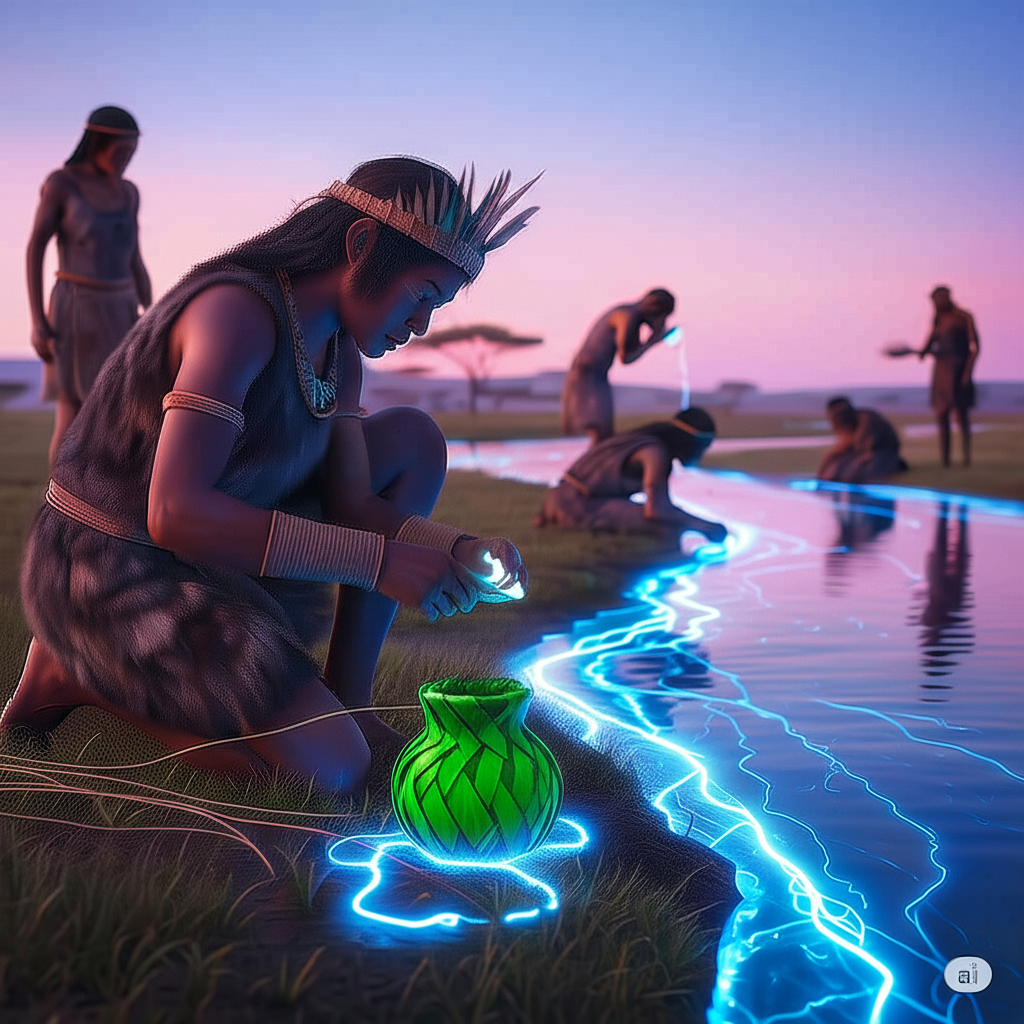
This, in its most elemental form, is product sense. It’s the ability to see beyond the immediate fix to build a system that serves a future, predictable need.
This ancient hunt is not so different from the world of business today. We are all hunting for a carcass—revenue, customers, or market share to feed our teams and our mission. And to sustain the hunt, we need water—the cash flow, talent, and operational capacity that keep us going. It’s easy to get so focused on the carcass that we only drink when we’re desperately thirsty, patching problems with short-term, inefficient fixes.
Product sense is the instinct to stop and build the container.
This idea crystallized for me while building my company, WatOR. Few months in, we hit a hard wall. Our mission depended on a low-cost, durable field device to fortify water with iron and B vitamins to combat anemia, but we were stuck on design. Turns out, it is incredibly difficult to reliably dispense a powder premix into water. We tried and tried. We had no budget for a design firm, no clear specifications, and frankly, were out of good ideas.
My role wasn't to magically produce the answer. I didn't have it. My role, I realized, was to build the container that could help us get to the answer.
So I proposed something unconventional: a student design competition at a top engineering college in Bombay. I reasoned that if we could frame the problem correctly, the solution would surface. I worked with our Head of Product, Arun, to draft a brief that was less about a specific design and more about a set of brutal, real-world constraints.
The response was overwhelming. We received dozens of concepts. Many were raw, but a few were ingenious. One prototype stood out. It was shockingly simple, built from common materials, and had been field-tested by the student who designed it. It solved for our constraints in ways our internal team, trapped by our own assumptions, had never considered.
We selected that design as the foundation for our final device. But the outcome was more than just hardware. The process gave Arun a renewed sense of momentum and ownership over the product’s direction. We hadn’t just found a solution; we had created a system that delivered one and empowered our team in the process.
This experience cemented a core belief that now guides me: when you face paralyzing ambiguity, your first job isn't to find the answer—it's to design the right container that allows answers to emerge.
The design competition was our leafy pouch. It was the structure that held potential and brought it back to camp. This is my product sense. It’s not about having all the ideas, but about creating the conditions for the best ideas to reveal themselves. It is the discipline of looking past the immediate thirst to build the thing that will sustain your tribe for the journey ahead.
Keep building, one container at a time.
With love for the process,
P. ❤️